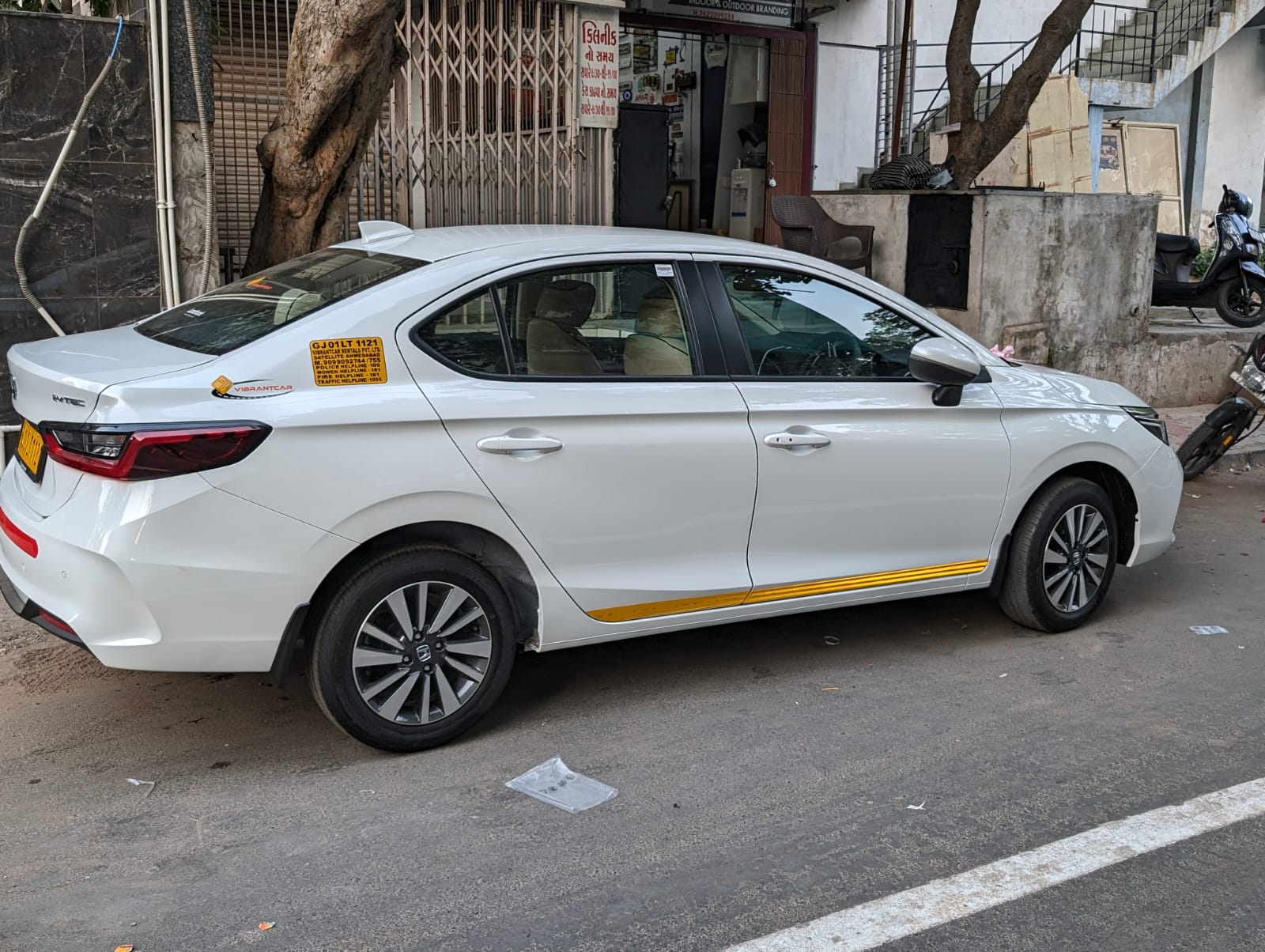
Every travel desk has had this argument. Someone in finance points out that app cabs are cheaper per trip than the dedicated car the sales director uses. Someone in admin points out that the sales director missed a flight last month because three app cabs cancelled in a row. Both are right, and neither is comparing the same thing.
This article sets out how to make the comparison properly. It does not quote rates, because a monthly car rental depends on the city, vehicle class, hours and kilometres, and any number we printed would be wrong for your case. It does set out the cost drivers, the break-even logic and the hybrid arrangement most companies end up with.
Key takeaways
- App cabs win on low, unpredictable volume; monthly cars win on high daily utilisation.
- Count surge, cancellations, waiting, reimbursement admin and invoicing, not only the fare.
- Use three months of trip data to find your own break-even, then split usage into tiers.
- A hybrid of dedicated cars, a corporate account and reimbursed app cabs is the usual outcome.
Where app cabs genuinely win
- Low, unpredictable volume: a few trips a week with no pattern.
- Short single trips in a city with dense supply, at off-peak hours.
- Individual employees who can be reimbursed against a receipt without central booking.
- Cities where you have no other arrangement and a trip comes up today.
For this usage, a dedicated vehicle would sit idle most of the day, and idle time is what you pay for with a monthly car. Do not fight this; build it into the hybrid model below.
Where app cabs quietly cost more
The per-trip fare is visible. The following are not, and they add up:
- Surge exposure. Airport runs at 5 am, rain, and month-end all coincide with the trips your senior people care about most.
- Cancellations and waiting. A cancelled cab ten minutes before an airport departure is not a fare problem, it is a missed-meeting problem.
- No waiting model. A director who needs a car between four meetings across the city either pays for four separate rides with four waits, or keeps one car.
- Driver and vehicle variability. Client-facing travel, visiting leadership and interviews are the trips where the vehicle and the driver are part of the impression.
- Reimbursement admin. Dozens of individual receipts per employee per month, checked by someone, keyed by someone, and lost occasionally.
- Tax treatment. Individual receipts from a platform are rarely in your company's name with your GSTIN. A monthly contract from a registered operator is a single tax invoice. Whether you can claim input credit depends on the vehicle and the use, which we cover in our GST guide, but you cannot claim what you do not have an invoice for.
The break-even logic
A dedicated monthly car with driver is typically priced on a monthly package covering a fixed number of hours and kilometres, with extras beyond that. Its cost per day is roughly the same whether you use it for two hours or ten. App cabs cost by the trip.
So the question is utilisation: how many hours a day, on how many days a month, does someone need a vehicle available? As a rule of thumb, once a single user or a small pool of users needs a car for the better part of the working day on most working days, the monthly car is usually the cheaper option once waiting, surge and admin are counted. Below that, app cabs or a pay-per-use corporate account are cheaper. Your own numbers will decide where the line falls, and a good vendor will help you compute it from your last three months of trip data rather than guess.
What to compare, side by side
| Factor | App cabs | Monthly car with chauffeur |
|---|---|---|
| Pricing basis | Per trip, variable with demand | Monthly package: hours plus kilometres, extras itemised |
| Availability at peak | Depends on supply and surge | Contracted; backup vehicle in SLA |
| Waiting between meetings | New booking each time | Included within package hours |
| Driver consistency | Different every trip | Assigned chauffeur, substitute only with notice |
| Invoice | Individual receipts per rider | One monthly tax invoice, cost-centre tagged |
| Admin effort | Reimbursement processing per employee | One approval per month |
| Best for | Ad hoc, low-volume, off-peak | Leadership, client-facing roles, daily high utilisation |
The hybrid model most companies settle on
Dedicated monthly cars for the two or three roles that genuinely need a vehicle for most of the day. A corporate account with a chauffeur-driven operator for airport transfers, guest movements and outstation trips, booked centrally with consolidated billing. App cabs, reimbursed, for everything else.
This keeps the fixed cost small, removes surge and cancellation risk from the trips that matter, and gives finance one invoice for the bulk of the spend. It also makes a travel policy easy to write: which role gets which tier, and who can book what.
What Vibrantcar offers on monthly terms
We provide dedicated sedans, SUVs and premium cars on monthly contracts with an assigned chauffeur, a backup commitment, and a package structure that states hours, kilometres and extras in writing. Cities and vehicle classes are on our monthly car rental pages, and every quote is prepared from your expected utilisation, not a list price.
Frequently asked questions
What is included in a monthly car rental package?
Typically the vehicle, an assigned chauffeur, a stated number of hours and kilometres per month, and routine maintenance and insurance. Fuel may be included or billed at actuals. Tolls, parking, outstation driver allowance and night charges are itemised separately. Ask for the inclusion list in writing.
Can a monthly car be used for outstation trips?
Usually yes, with outstation kilometres and driver allowance billed on the contracted outstation rate. Confirm that the vehicle carries the permit for interstate travel if your routes cross a state border.
Can we change the vehicle class mid-contract?
Most operators allow an upgrade or downgrade with notice, with the package repriced. Build the notice period into the contract so the change is predictable on both sides.
Working out whether a monthly car makes sense?
Send us three months of trip data or even a rough description of who travels and how often. We will show you the break-even and quote the tiers that fit.