Guest transport is the part of a destination wedding that nobody photographs and everybody remembers when it goes wrong. Two hundred guests, three hotels, five functions across three days, an airport 25 kilometres away and a baraat that must arrive at exactly the time the pandit said. It is a logistics problem dressed up as hospitality.
This checklist is how we plan it for families and wedding planners in Jaipur and Udaipur. It works for Jodhpur, Jaisalmer and most other Rajasthan venues with the city-specific notes adjusted.
Key takeaways
- Plan from the arrival sheet; arrival day is usually the peak.
- Lay every movement out in a grid so vehicle reuse and conflicts are visible.
- Treat the baraat as a separate event with its own vehicles and a road buffer.
- Both Jaipur and Udaipur have old-city zones with no coach access; put the transfer on the grid.
- Coordinators at each hotel and venue, with staggered departures they control.
Step 1: start from arrivals, not from functions
The first document is not the function schedule. It is the arrival sheet: every guest group, how they are arriving, when, and where they are staying. Airport flights bunch into morning and evening banks; trains arrive at odd hours; road guests from Delhi arrive spread across an afternoon. This sheet decides how many vehicles you need on arrival day, which is usually the peak.
Collect it in one place, with a phone number per group, four weeks out. It will change until the day before. Plan for that.
Step 2: build the movement grid
For each function, write down: where guests start, where they must be, by what time, and how many. Then add the return. A three-day wedding with five functions typically produces eight to twelve movements, some of them overlapping. Laying them out in a grid immediately shows where vehicles can be reused and where they cannot.
| Movement | From | To | Guests | Window | Vehicle plan |
|---|---|---|---|---|---|
| Airport arrivals | JAI airport | Hotel A and B | 60 across 5 flights | 10:00 to 16:00 | Sedans and SUVs per family, one tempo traveller for the 14:30 bank |
| Mehendi | Hotel A and B | Venue lawn | 180 | 16:00 to 17:00 | 3 coaches in two waves plus 4 SUVs for elders |
| Return | Venue lawn | Hotels | 180 | 21:30 to 23:00 | Same coaches held on standby, staggered departures |
Step 3: choose the vehicle mix
- Sedans and SUVs for the immediate family, elders, and any guest group that will move on its own schedule. Assign by name, not by pool.
- Tempo travellers (9 to 17 seats) for friend groups and extended family who move together and want to sit together.
- Coaches (35 to 49 seats) for bulk hotel-to-venue movements. They are the most efficient and the least flexible, so run them in waves with a marshal at each end.
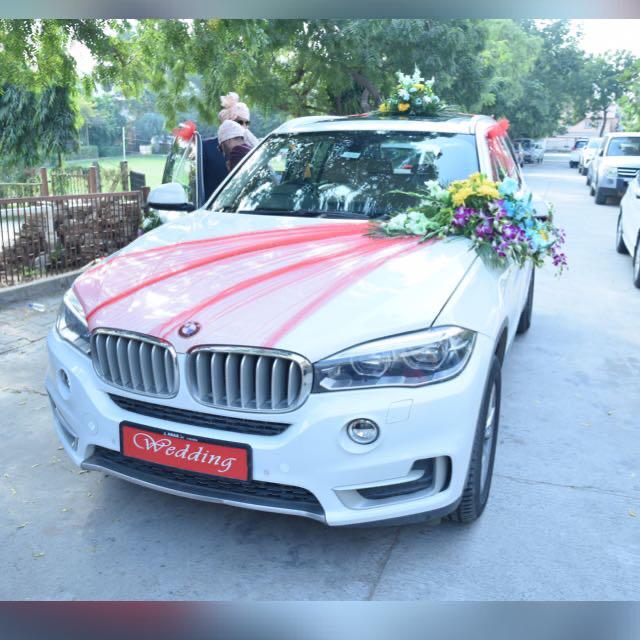
- One or two decorated cars for entries, kept separate from the guest fleet with their own timing.
- A floating pair of SUVs with no assigned duty, for the guest who missed the coach, the forgotten item at the hotel, and the last-minute run to the market.
Our guide to tempo travellers, mini buses and coaches explains the seat counts and luggage realities in more detail.
Step 4: the baraat, treated as its own event
The baraat has a departure point, a procession distance, a band, horses or a vintage car, and an arrival time that matters to the ceremony. It cannot share vehicles with the guest shuttle running in parallel. Plan it with its own vehicles, its own coordinator and a buffer of at least thirty minutes on the road segment, because processions take longer than anyone estimates and the roads around heritage venues do not allow for catching up.
Jaipur: what the roads actually do
- Jaipur International Airport at Sanganer is on the south side of the city. Hotels on the Amer and Delhi Road side can be an hour away in evening traffic even though the map says 25 kilometres.
- Wedding venues cluster on Delhi Road, Tonk Road, Kukas and the Amer belt. Movements between clusters cross the city; plan them outside 17:30 to 20:30 where you can.
- Guests driving from Delhi arrive via NH48 through the Kukas side; a five-to-six-hour drive with stops. If several groups are driving, a meeting point at Kukas with a welcome vehicle works well.
- Old-city venues near Hawa Mahal and the walled city have no coach access. Guests transfer to tempo travellers or SUVs at a staging point, and that transfer needs to be on the grid.
Udaipur: what the roads actually do
- Maharana Pratap Airport at Dabok is roughly 22 kilometres east of the city, about 45 minutes to lake-side hotels. Flight banks are tighter than Jaipur's, so arrival-day peaks are sharper.
- Lake Pichola hotels reached by boat need a jetty-side plan: vehicles drop at the jetty, luggage goes separately, and timing is set by the hotel's boat schedule.
- The old city around Jagdish Temple and Gangaur Ghat is narrow, one-way in places and closed to large vehicles. Coaches stage on the outer roads and guests move the last stretch in smaller vehicles or on foot.
- Venues on the Ambamata and Fateh Sagar sides are reachable by coach; palace venues outside the city are on good roads but far enough that a return wave after midnight needs drivers rostered for it.
Step 5: coordination on the ground
- One coordinator per hotel and one per venue on function evenings, with a printed list of vehicles, drivers and guest groups.
- A single WhatsApp group with the family's point person, the planner, the transport coordinator and the hotel front desks. Not the guests.
- Name boards and vehicle numbers shared with each guest group the evening before.
- Staggered departures announced by the coordinator, not by the coach filling up. A coach that leaves when full strands the people who arrive two minutes later.
- Drivers briefed on the venue's entry gate, parking area and the timing of the return wave, in writing.
Timeline
| When | What |
|---|---|
| 8 weeks before | Share the function schedule, hotels and rough guest count with the transport partner. Agree the vehicle categories. |
| 4 weeks before | Arrival sheet first version. Movement grid drafted. Decorated car and baraat plan confirmed. |
| 2 weeks before | Vehicle counts locked with a small buffer. Coordinators named. Hotels informed of coach staging areas. |
| 1 week before | Final arrival sheet. Driver roster with phone numbers. Route check for any venue not used before. |
| Day before | Vehicle list to the family point person. Welcome vehicles positioned for the earliest arrivals. |
| Each function day | Morning briefing with coordinators; waves confirmed; floating vehicles positioned at the main hotel. |
Keeping the cost sensible
Wedding transport gets expensive through empty running: coaches sent back to the depot between the outbound and return waves, or a vehicle per guest group when a shared tempo traveller would have served. The levers that reduce cost without reducing service are clustering guests in fewer hotels, holding coaches on standby at the venue rather than releasing them, sharing vehicles between guest groups on the same timing, and giving the transport partner the final numbers early enough to right-size the fleet. Pricing is always specific to dates, city and fleet mix, so ask for a quotation against the movement grid rather than a per-vehicle rate.
Frequently asked questions
How many vehicles do we need for 200 wedding guests?
It depends on how many hotels the guests are in and how many functions run at once. As a starting shape, bulk hotel-to-venue movements for 200 guests are usually served by four to five coaches in waves, plus sedans and SUVs for immediate family and a few tempo travellers for groups that move separately. The movement grid gives the real answer.
Can decorated wedding cars be arranged in Jaipur and Udaipur?
Yes. Premium sedans and SUVs can be decorated to the family's theme for entries and the baraat. Share the theme and the timing so the decoration is completed at the hotel before the procession forms.
Do you provide transport for guests arriving from Delhi by road?
Yes. We run one-way and round-trip vehicles between Delhi and Jaipur or Udaipur, and can meet self-driving guests at an agreed point on the highway with a welcome vehicle.
Planning a wedding in Rajasthan?
Share your dates, hotels and rough guest count. We will send back a movement grid and a fleet plan you can take to the family and the planner.